The Complete Guide to KDP Planner Interiors: 130 Pages of Weekly Spreads and Notes Pages for Amazon KDP
If you are exploring the world of self-publishing on Amazon KDP, you have likely come across the term planner interior. A planner interior is the inner content of a paperback or hardcover book — the pages that make the book functional, not just readable. For KDP publishers, a well-designed planner interior can be the difference between a product that sells and one that sits idle.
This guide walks you through everything you need to know about a specific type of KDP planner interior: a 130-page black-and-white planner with weekly spreads and dedicated notes pages. We cover the specifications, the design choices, and how this interior fits into a wide range of use cases — from personal productivity to business planning and creative journaling. Whether you are a beginner or an experienced KDP author, you will leave with a clear understanding of how to use and market this interior effectively.
What Is a KDP Planner Interior?
A KDP planner interior refers to the content file you upload to Amazon KDP when creating a paperback or hardcover book. Unlike a traditional book filled with chapters, a planner interior is structured around functional layouts: calendars, daily or weekly spreads, to-do lists, goal trackers, and note-taking pages. The interior is the heart of the planner — it determines how users will interact with the book day after day.
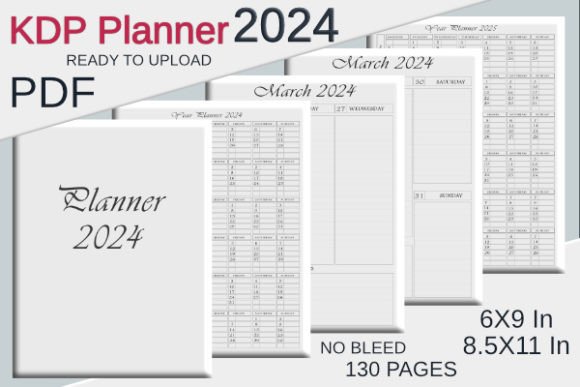
The interior we are focusing on here includes 130 pages, organized around weekly spreads with a few notes pages toward the back. It is designed in black and white, using a notes grid lined paper format. This specific structure makes it versatile enough for personal, professional, and educational use.
Understanding the Format: 6×9 Inches and 8.5×11 Inches
One of the first decisions you face when creating a planner on KDP is the trim size. This interior comes in two sizes:
- 6×9 inches — a compact, portable format. This size is ideal for daily carry, fitting easily into a bag or purse. It feels like a standard trade paperback and is a popular choice for personal planners and journals.
- 8.5×11 inches — a larger, letter-size format. This size offers more space per page, making it suitable for desk use, corporate planning, or detailed note-taking. It is often preferred for professional or educational settings.
Having both formats in a single product listing allows you to cater to different customer preferences. Some users want portability; others want spacious layouts. By offering both PDF files (one for each size), you give buyers exactly what they need without forcing them to compromise.
The Anatomy of the 130-Page Planner Interior
Let’s break down the 130 pages into their core components. Understanding the structure helps you communicate its value to potential buyers and also helps you decide how to use it yourself.
Weekly Spreads: The Backbone of the Planner
The majority of the pages are dedicated to weekly spreads. A weekly spread typically shows a full week on two facing pages, with space for each day of the week. Depending on the design, it might include areas for appointments, tasks, notes, and priorities.
This interior uses a clean, minimalist layout — black and white, with a grid lined paper background. The grid lines help users write neatly, draw tables, or sketch ideas. The absence of color keeps the printing costs low (important for KDP publishers) and gives the planner a professional, understated look that appeals to a broad audience.
Because the planner has 130 pages total, and weekly spreads take up the bulk of those pages, you can estimate that it covers roughly 16 to 18 weeks (depending on how many pages are allocated to notes). This makes it ideal for a semester, a quarter, or a focused project period.
Notes Pages: Flexible Space for Reflection and Capture
Toward the back of the planner, you will find several notes pages. These pages are not tied to any specific week. They use the same grid lined paper design, offering a consistent visual experience. Notes pages give users room to:
- Jot down meeting notes or lecture highlights
- Brainstorm ideas for projects
- Keep a running list of books to read or goals to pursue
- Write journal entries or reflections
The placement of notes pages at the back is intentional. It provides a dedicated space for ideas that don’t fit into the weekly structure, without cluttering the daily spreads. This separation makes the planner more organized and easier to use.
Why Black and White? The Practical and Aesthetic Advantages
Many new KDP publishers wonder whether to create color or black-and-white interiors. For a planner like this, black and white offers several real advantages:
- Lower printing cost — Amazon charges less for black-and-white pages, which means you can price your planner competitively and still maintain a healthy royalty.
- Clean, professional look — Without the distraction of color, users can focus on the content. Grid lines remain clear, and the overall aesthetic feels timeless and serious.
- Compatible with all pens and highlighters — Users can write with any color ink they like. The black-and-white background never clashes.
- Easier to print and proof — Black-and-white interiors are simpler to test-print at home or review on screen. You avoid issues with color calibration.
For a planner intended for daily, practical use, black and white is often the smartest choice.
Notes Grid Lined Paper: A Closer Look
Grid lined paper (also called graph paper) has a subtle grid of horizontal and vertical lines. It is a favorite among students, engineers, designers, and anyone who needs to align information precisely. In a planner context, grid lines help with:
- Writing in straight lines when no ruled lines are present
- Drawing tables, diagrams, or timelines
- Sketching simple illustrations or floor plans
- Keeping handwriting consistent
By using notes grid lined paper throughout the entire interior, the planner offers a unified experience from the first week to the last note. There is no abrupt change in paper style, which makes the book feel cohesive and intentional.
Practical Use Cases: Who Needs This Planner Interior?
Because this interior is both simple and versatile, it appeals to a wide range of users. Here are some of the most common use cases:
Students and Academics
Students can use the weekly spreads to track assignments, exams, and study sessions. The notes pages at the back are perfect for lecture notes or research ideas. The grid paper helps with drawing graphs or organizing data.
Freelancers and Entrepreneurs
Freelancers often need to balance multiple projects. Weekly spreads let them allocate time for client work, admin tasks, and personal development. The notes pages can capture meeting notes, brainstorming sessions, or business ideas.
Busy Professionals
For anyone managing a packed schedule, a planner with weekly spreads provides a bird’s-eye view of the week ahead. The compact 6×9 version fits in a work bag, while the 8.5×11 version lives on a desk as a central planning hub.
Creative Journalers
Even if you don’t run a business, this interior works beautifully for creative journaling. Grid lines allow you to draw, make lists, write poetry, or plan events. The notes pages give you unstructured space for longer entries.
How to Use the Two PDF Files (6×9 and 8.5×11) in Your KDP Listing
When you download this interior, you receive two separate PDF files: one for the 6×9 size and one for the 8.5×11 size. This is a common and effective strategy for KDP publishers. Here’s how to handle them:
- Create two separate book listings — One listing for the 6×9 version and another for the 8.5×11 version. This allows customers to find the exact size they want.
- Use the same cover template — You can design a cover that works for both sizes, or create slightly different covers that highlight the size difference.
- Price them differently — The 8.5×11 version will cost more to print, so adjust your pricing accordingly. The 6×9 version can be priced lower to attract budget-conscious buyers.
- Optimize keywords for each size — Include “6×9 planner” and “8.5×11 planner” in your keywords so that your listings appear for size-specific searches.
Offering both sizes under the same brand creates a product family that customers can trust. If someone buys the 6×9 version and loves it, they may return to buy the larger version for their desk.
Clarifying Common Misunderstandings About Planner Interiors
If you are new to KDP, a few points often cause confusion. Let’s clear them up:
- “A 130-page planner will cover a full year.” — Not necessarily. With 130 pages and weekly spreads, you typically get 16–18 weeks, plus notes pages. That is about 4–5 months. If you want a full-year planner, you would need more pages (e.g., 200+). For a semester or quarter, 130 pages is perfect.
- “Black and white looks cheap.” — On the contrary, black and white often looks more elegant and professional, especially with grid lines. Many premium notebooks use monochrome interiors deliberately.
- “I need separate files for different trim sizes.” — Yes. KDP requires the interior PDF to match the exact trim size you select. That is why the download includes separate PDFs for 6×9 and 8.5×11. You cannot use the same file for both sizes.
- “Notes pages are unnecessary.” — Notes pages add value. They give users flexibility. A planner without notes pages can feel too rigid. The extra space is one of the features that customers specifically look for.
SEO and Marketing Tips for Your Planner Interior Listing
Once you have your interior and cover ready, you need to help customers find you. Here are a few SEO-friendly practices for your KDP product page:
- Use descriptive titles — Include key phrases like “130 Page Weekly Planner,” “Black and White Planner Interior,” “Grid Lined Notebook,” and “6×9 and 8.5×11 PDF.”
- Write a detailed description — Use bullet points to highlight features: 130 pages, weekly spreads, notes pages, two sizes, black-and-white grid paper. Use natural language that speaks directly to the buyer’s needs.
- Add relevant keywords — Think about what your ideal customer would search for: “weekly planner for work,” “grid journal for students,” “simple planner for entrepreneurs,” etc.
- Leverage the “Look Inside” feature — Upload a preview that shows the first few weekly spreads and a notes page. Customers want to see the interior before they buy.
- Include a back-cover description — Summarize the key benefits in a quick, scannable format.
Real-World Example: How a Freelance Designer Uses This Planner
Let’s imagine Maya, a freelance graphic designer. She buys the 6×9 version to carry with her. Every Monday, she fills in her weekly spread: client projects on Monday and Wednesday, admin time on Tuesday, personal work on Thursday, and Friday as a flexible day. She uses the notes pages at the back to sketch logo ideas and write down client feedback.
Maya also buys the 8.5×11 version for her home desk. She uses the larger size to lay out her monthly goals, track invoices, and plan larger projects. The grid paper helps her draw wireframes and layout sketches. The two sizes work together perfectly, each serving a different purpose.
This example shows that the interior is not just a product — it is a tool that adapts to real workflows. When you present it this way in your listing, customers can immediately see how it fits into their own lives.
Final Thoughts: The Versatility of a Well-Designed Planner Interior
A 130-page KDP planner interior with weekly spreads and notes pages is a practical, flexible product that meets the needs of students, professionals, creatives, and anyone seeking more structure in their week. The black-and-white grid lined paper design is timeless, affordable to print, and easy to use. With two size options (6×9 and 8.5×11), you can reach a broader audience and offer real choice without overwhelming yourself as a publisher.
Whether you plan to use this interior for your own planning, sell it on KDP, or both, understanding its features and benefits helps you get the most out of it. The key is to focus on what makes it useful: clean layouts, plenty of room for writing, and a logical flow from weekly spreads to notes pages. That combination is what turns a simple notebook into a powerful planning system.
Now that you know the full story behind this interior, you are ready to upload it, market it, and help your customers get organized — one week at a time.
Start your KDP journey with confidence, and let the pages speak for themselves.