The Bourbon Tasting Journal Template: A Complete Guide for Amazon KDP Publishers
Bourbon tasting has evolved from a casual pastime into a passionate pursuit for thousands of enthusiasts around the world. Whether someone is sampling a rare single barrel release or comparing budget-friendly bottles with friends, the desire to document, reflect, and remember each pour grows stronger with every sip. For Amazon KDP publishers, this presents a compelling opportunity. A well-designed Bourbon Tasting Journal Template offers both structure and style, giving buyers a dedicated space to record their experiences while giving you a print-ready product that can go live on KDP in minutes.
Understanding what makes a bourbon tasting journal interior effective is essential before you start formatting pages and uploading files. The right template does more than just look good—it guides the user through a consistent, thoughtful tasting process, encourages repeat use, and builds a sense of ritual around the act of journaling. And when you pair that with the technical specifications that KDP demands, you have a product that works seamlessly for both you and your customers.
Why a Dedicated Journal Matters for Bourbon Enthusiasts
Bourbon is a sensory experience. The way light catches the amber liquid, the first wave of vanilla and oak on the nose, the burn that softens into warmth on the finish—every detail matters. Casual note-taking on a phone or scrap paper rarely captures the full picture. A dedicated journal changes that. Using a Bourbon Tasting Journal Template gives the user a repeatable framework so each tasting entry follows the same logical flow. They evaluate the bourbon's appearance, aroma, taste, and finish in a structured way, making it easy to compare bottles side by side months or even years later.
Beyond functionality, there is an emotional component. People who collect bourbon or host tasting nights take pride in their journey. A journal becomes a personal archive, a record of discovery, and a conversation starter. When you design an interior that respects that passion, you are not just selling pages—you are offering a tool that enhances a meaningful hobby.
What to Include in a Bourbon Tasting Journal Interior
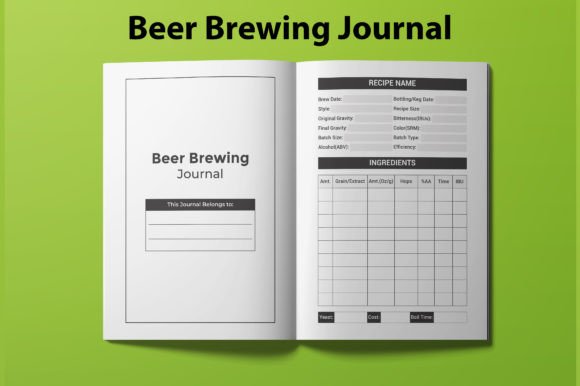
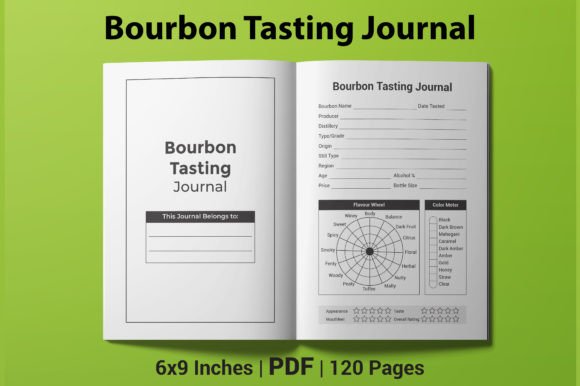
A strong interior balances guided prompts with open space. Too many fields can feel overwhelming, while too few leave the user wondering what to write. The sweet spot includes fields for the bourbon name, distillery, age statement, proof or ABV, and price paid. Then, move into sensory categories: appearance (color, clarity, legs), nose (dominant aromas, intensity), palate (flavors, mouthfeel, balance), and finish (length, warmth, lingering notes). A rating scale from one to ten or a simple star system lets users quickly score each pour.
Some templates also include sections for personal tasting notes, food pairing suggestions, and the date of tasting. Including a small area for a bottle label or sticker adds a tactile, scrapbook-like element that many enthusiasts love. The best Bourbon Tasting Journal Template options offer these features while maintaining a clean, uncluttered layout that prints beautifully at 6x9 inches.
Technical Specifications That Make Your Interior KDP-Ready
When you prepare a bourbon tasting journal for Amazon KDP, the technical details determine whether your upload succeeds or fails. The dimensions you choose affect everything from margins to readability. A 6x9 inch trim size is one of the most popular choices for journals and notebooks on KDP. It fits comfortably in hand, looks substantial on a shelf, and provides enough space for detailed entries without feeling bulky.
Your page count options—100, 110, or 120 pages—give buyers flexibility. A 100-page journal offers around 50 tasting entries if you use a two-page spread per bourbon. That is a solid starting point for someone new to journaling. The 110 and 120-page versions extend that capacity, making the journal last longer for frequent tasters. Since all these page counts fall within KDP's standard printing range, your production costs remain reasonable.
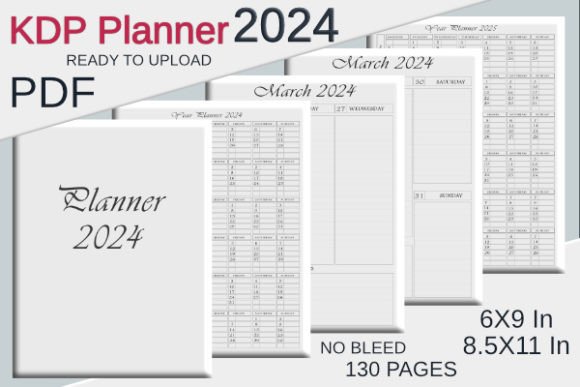
The Bourbon Tasting Journal Template you choose should specify no bleed. This simplifies your layout dramatically. With no bleed, you do not need to extend background colors or images beyond the trim edge. Your content sits cleanly within the page boundaries, and KDP's automatic cropping will not cut off any text or design elements. For an interior-only product, no bleed is the safest and most professional choice.
File Formats That Save You Time and Headaches
KDP accepts PDF uploads for interiors, but having your template available in multiple formats gives you flexibility. A complete package should include PDF, AI, EPS, and JPG files. The PDF is your primary upload file—ready to go with all fonts embedded, margins set correctly, and pages numbered. The AI and EPS files allow you to make custom edits in vector editing software if you want to tweak layouts, add your own branding, or adjust spacing. The JPG files serve as preview images or can be used for quick mockups.
Having a PDF file that is 100% ready for Amazon KDP uploading means you can skip the trial-and-error phase. You open your KDP account, select your trim size, upload the PDF, and move on to creating your cover. No reformatting, no margin adjustments, no last-minute font substitutions. That speed matters when you are building multiple journals or launching a series of tasting notebooks.
How This Fits Into a Modern Self-Publishing Workflow
The self-publishing landscape moves fast. Authors and publishers who succeed on KDP learn to streamline their process without sacrificing quality. A pre-designed interior eliminates one of the most time-consuming steps. Instead of building entry layouts from scratch, you receive a polished, tested template that already accounts for common KDP pitfalls like improper margins, missing crop marks, or low-resolution images.
You still control the cover, which is where your brand identity shines. Since the interior is provided separately, you can mix and match designs. Maybe you want a rustic kraft paper cover for one journal and a sleek minimalist cover for another, both using the same interior layout. This modular approach keeps your product line cohesive while allowing creative variation.
The high-resolution interiors ensure that when a customer receives their printed journal, every line of text and every field box looks sharp. Blurry or pixelated interiors reflect poorly on your brand and lead to returns or negative reviews. Print-ready files eliminate that risk.
Practical Benefits for the End User
Your customers are not thinking about bleed or trim sizes. They are thinking about the next bottle they plan to try, the tasting they want to remember, or the gift they need for a bourbon-loving friend. The Bourbon Tasting Journal Template translates technical precision into real-world usability. A well-spaced layout means they can write comfortably without cramming notes into tiny boxes. Durable pages that take ink well—whether fountain pen, ballpoint, or fine-tip marker—keep their entries looking clean.
For the host of regular tasting events, a journal becomes a communal tool. Each guest can fill out their own entry for the same bourbon, then compare impressions around the table. This social dimension adds value beyond personal use. Someone buying a journal for themselves might end up buying several more as gifts for their tasting group.
Design Considerations That Elevate the Experience
The visual tone of your interior sets expectations. A bourbon tasting journal benefits from warm, amber-inspired accent colors or subtle distressed textures that echo the aged oak of bourbon barrels. But restraint matters. Over-designed interiors with heavy graphics or distracting backgrounds make it harder to read and write. The best templates use tasteful headers, clear section dividers, and enough white space to let the user's notes take center stage.
Typography plays a role too. A serif font for headings gives a classic, whiskey-cellar feel, while a clean sans-serif for entry fields ensures legibility. Font sizes should be generous enough for easy reading but not so large that entry space is wasted. Consistency across all 100, 110, or 120 pages keeps the experience predictable and comfortable.
Observing the Market and Finding Your Angle
The bourbon industry has seen sustained growth, and with it, the culture of tasting and collecting has expanded. Enthusiasts range from casual drinkers exploring their first bottle of Eagle Rare to seasoned collectors with vaults of Pappy Van Winkle. A journal template designed broadly enough to serve both ends of that spectrum will appeal to the widest audience. Leave room for beginners to learn the vocabulary of tasting while giving experienced users the depth they expect.
You might also consider niche angles: a journal focused on Kentucky straight bourbons, one that emphasizes blind tasting comparisons, or a compact version for travelers visiting distilleries. Each of these can be built from the same core template with slight modifications. Having the source files in AI or EPS format makes these adaptations straightforward.
Common Factors People Consider Before Choosing a Template
Publishers often worry about whether a template looks generic. The key is in the details. Customizable header areas, unique icon sets, or subtle background elements can differentiate your product. But remember that most buyers on Amazon make their decision based on the cover and the preview images. The interior quality becomes apparent once they receive the book, which is why high-resolution, print-ready interiors lead to better reviews and repeat customers.
Another consideration is the learning curve. If you are new to KDP, you want a template that works without requiring advanced design skills. A PDF that is 100% ready for upload removes that barrier entirely. You do not need to learn Adobe InDesign, adjust gutter margins, or troubleshoot font licensing. You upload, set your price, and publish.
Final Observations on Building a Bourbon Journal Product Line
A Bourbon Tasting Journal Template is more than a collection of formatted pages. It is an invitation to slow down, taste deliberately, and document something personal. For the KDP publisher, it represents a product category with passionate buyers, strong gift potential, and relatively low competition compared to general journals. By focusing on the interior quality, adhering to KDP's technical requirements, and delivering a design that respects the ritual of bourbon tasting, you create a product that serves both your business goals and your customers' enjoyment.
The path from template to published book is straightforward. Choose your page count, confirm your 6x9 trim size, and use the no-bleed PDF for a smooth upload. With the right interior in hand, you are free to focus on what makes your brand stand out—the cover design, the product description, and the connection you build with every enthusiast who picks up your journal.