Designing the KDP Fitness Tracker
The most successful low-content books do more than fill a niche—they create a seamless visual experience that keeps users engaged day after day. For creators building their catalog on Amazon KDP, the Diet and Fitness Tracker Journal for KDP represents a prime opportunity to merge structured UX design with modern aesthetics. This isn’t just about tracking macros; it’s about crafting a visual journey where typography, spacing, and layout work in harmony to motivate the end user. From the first goal-setting page to the final weekly checkpoint, every element must serve a clear functional and visual purpose.
The Architecture of Motivation: Designing for User Experience
In the context of print design, a journal interior is a physical interface. The Diet and Fitness Tracker Journal for KDP template excels by prioritizing visual hierarchy and brand identity. When users open the book, they should immediately understand where to write, what to track, and why it matters. This is achieved through intentional editorial design—using consistent grids, thoughtful white space, and clear section headers to reduce cognitive load.
Consider the Goal Setting pages. From a graphic design perspective, these pages must balance aspiration with practicality. The layout should guide the eye from the primary objective down to the actionable milestones. This flow mimics a well-designed user interface (UI), where the call-to-action is clear and the path forward is frictionless. For the publisher, this translates directly into higher customer satisfaction and better reviews, as the user feels supported by the book’s structure.
Visual Communication Through Tracking Logs
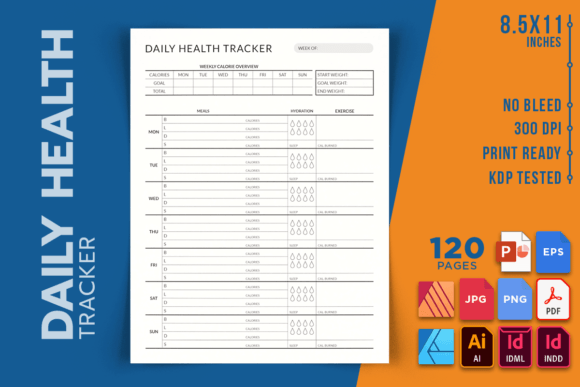
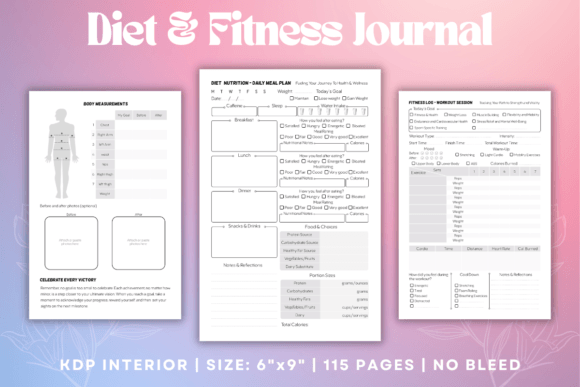
The core functionality of any health journal lies in its logs—the Nutrition Quest and Workout sections. Here, the design workflow must solve a specific problem: how to present dense data (calories, macros, reps, sets) without overwhelming the user.
- Data Visualization: Even in print, effective use of tables and checkboxes creates a rhythm. Repeating iconography or subtle shading helps users categorize information at a glance.
- Typography Choices: The selection of typefaces is crucial for brand identity. A clean, modern sans-serif communicates efficiency and energy, while a lighter serif can add a premium, thoughtful feel to the reflective sections.
- Color Palette: Even within a grayscale interior, the strategic use of heavy rules, reverse type, and stencil-style icons establishes a strong visual hierarchy. This ensures the log feels dynamic, not monotonous.
Practical Applications for Creative Projects
Understanding the design elements within this template empowers you to apply its logic across multiple creative projects. The principles used in this journal interior are directly transferable to broader branding and digital marketing efforts.
- Branding and Logo Design: The consistent use of a specific grid structure can inspire your wider brand system. The modular nature of the weekly checkpoints mirrors the scalability required for effective logo design and responsive web layouts.
- Social Media Graphics: The layout grids designed for this 6x9 interior can be adapted into templates for Instagram or Pinterest posts, promoting content that aligns visually with the physical product.
- Packaging and Merchandise: The visual language established here—bold headers, clean data fields—works beautifully on packaging for related health products or as a consistent theme across a digital product suite.
- Web and UI Design: The user flow from “Weekly Checkpoints” back to “Goal Setting” mirrors the loop found in habit-tracking apps. Studying this print UX design can offer analog insights for digital UI design projects.
Ensuring Scalability and Consistency
When selecting or customizing a creative asset like this journal interior, scalability is key. The template must maintain its integrity whether printed in black and white or viewed as a digital sample. Modern aesthetics demand that the design feels current but not trendy—it should withstand seasons of use. By focusing on readability and consistent design trends (like minimalism and functional decoration), you ensure the product appeals to a broad audience dedicated to their personal health journey.
Ultimately, the choice of interior page layout is a direct reflection of your brand’s promise. Whether you are developing a single journal or a full series of health planners, the clarity and energy embedded in your typography and color palette will speak directly to your user's aspirations. A thoughtful approach to your design workflow ensures that every page turn feels like a step forward—transforming a simple tracker into a powerful tool for lasting change.