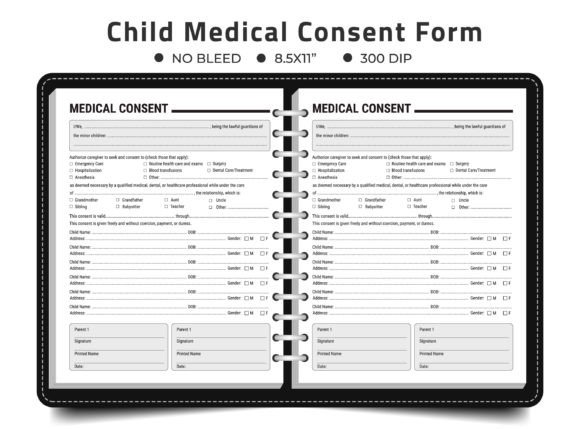
Child Medical Consent Form: A Practical Guide for Parents and Caregivers
You drop your child off at soccer practice, camp, or a friend's house, and for a moment, everything feels fine. Then you think about it: what if something happens and you are not there? A scrape, a fever, an allergic reaction, or something more serious. In that instant, the person watching your child needs to make decisions—medical decisions—and they need your permission to act. That is exactly where a Child Medical Consent Form comes in. It is not just a piece of paper. It is a bridge between you and the people who care for your child when you cannot be present.
Think of it as a simple but powerful tool. It gives another adult the legal authority to seek medical treatment for your child if you are unavailable. Without it, doctors and nurses may be forced to wait, and in an emergency, every second truly counts. This form removes hesitation, clears up confusion, and ensures your child gets the care they need, when they need it.
When Does a Child Medical Consent Form Become Necessary?
Real life moves fast. One afternoon, your child is at a weekend camp, and the next, they are running a fever with a sore throat. The camp nurse calls, but you are in a meeting across town. You cannot get there quickly. If the nurse has your signed consent form on file, they can give over-the-counter medication, call a doctor, or even authorize emergency treatment without waiting for your signature. That is the kind of real-world situation where this document shines.
Schools are another setting. Field trips, sports events, and after-school programs often require a signed medical consent form. The teacher or coach cannot legally approve treatment on their own. Your form bridges that gap. It tells them exactly what they can do, what medications your child can take, and who to contact if something changes.
And then there are the unexpected moments. A babysitter, a grandparent watching the kids for the weekend, or a neighbor who takes your child to the park. You never plan for an accident, but they happen. A Child Medical Consent Form gives the person in charge the confidence to act, knowing they are backed by your authorization.
Who Benefits Most from Having This Form Ready?
Parents are the obvious answer, but the list goes much further. Caregivers, grandparents, nannies, and babysitters all benefit from having a signed form on hand. They are the ones on the ground when something goes wrong. They need clarity and permission, not guesswork.
Schools and daycare centers rely on these forms daily. They keep them on file for every child, so when a child falls on the playground or feels sick during class, the staff can respond immediately. Without a valid form, they may be stuck calling parents repeatedly or waiting for someone to arrive before they can act.
Sports coaches, camp counselors, and youth group leaders also fall into this category. They supervise children during activities that carry inherent risks—sports injuries, dehydration, allergic reactions from insects or food. A consent form ensures they can handle the situation without delay.
Travel is another scenario. If your child goes on a school trip to another state or country, you cannot be there. A Child Medical Consent Form becomes a vital document for the chaperones. It travels with the group and gives the responsible adult authority to seek medical care far from home.
What Information Should a Good Child Medical Consent Form Include?
A well-prepared form does more than just grant permission. It should capture essential details that medical professionals need to make informed decisions. Start with the child's full name, date of birth, and any known allergies. If your child has a peanut allergy, asthma, diabetes, or a medication they take regularly, that information needs to be front and center.
Include emergency contact numbers for both parents or guardians, as well as an alternate contact in case the primary numbers do not work. Some forms also ask for health insurance information and the name of the child's primary care physician. This allows a doctor or emergency room to access medical records quickly and coordinate care.
Many forms also include a section for specific medical instructions. For example, if your child can take acetaminophen but not ibuprofen, or if they need an EpiPen for bee stings, write it down. The more detail you provide, the better prepared the caregiver will be.
Some parents worry about giving too much authority. You can limit the scope of the form. You might authorize treatment for minor injuries and illnesses but specify that you must be contacted before any major procedure. That flexibility lets you tailor the form to your comfort level.
Common Questions Parents Have Before Signing
One of the biggest concerns is trust. Who gets a copy of this form? The answer is simple: only people who are directly responsible for your child's care. You give it to the school, the camp, the babysitter, or the coach. You do not hand it out to strangers. Keep the original and make copies as needed.
Another question is about expiration. Some forms are valid for a specific period, like a school year or a single event. Others are ongoing until you revoke them. It is smart to check the date and update the form annually or whenever your child's medical information changes. A new allergy, a change in medication, or a new emergency contact should all prompt an update.
Parents also ask whether the form is legally binding. In most places, yes, a properly signed and witnessed Child Medical Consent Form is recognized as a legal document. However, laws vary by state or country. If you are traveling abroad, you may need additional documentation. For everyday use within your home country, a standard consent form is usually sufficient.
Strengths and Limitations to Keep in Mind
The biggest strength of this form is speed. When an emergency happens, there is no time to track you down. The form lets caregivers act immediately. It also reduces stress for everyone involved. The caregiver knows they are doing the right thing, and you know your child is in good hands.
Another strength is clarity. A well-filled form removes ambiguity. It tells the caregiver exactly what to do and what not to do. That is especially important for children with chronic conditions or severe allergies, where a wrong decision could have serious consequences.
On the flip side, a form is only as good as the information on it. If you forget to list an allergy or a medication, the caregiver and medical team may not have the full picture. That is why it is important to review the form carefully before signing and to update it regularly.
Another limitation is that a consent form does not replace communication. It is a tool, not a substitute for talking to your child's caregiver about their health needs. You should still discuss any special conditions, medications, or concerns directly. The form backs up that conversation with written authorization.
Some parents worry about overreach. They fear that a form gives someone too much power. But you control the terms. You can specify exactly what is allowed and what is not. You can also revoke the form at any time by simply informing the caregiver in writing.
How Different Users Approach the Child Medical Consent Form
A single parent who works full-time might keep a stack of signed forms ready for the babysitter, the school, and the aftercare program. For them, it is about efficiency and peace of mind. They do not have time to scramble when something comes up. The form is already there.
A grandparent who watches the grandchildren regularly may ask for a form to feel secure. They want to know they can handle a situation if it arises. For them, the form is about responsibility and being prepared.
A camp director sees hundreds of these forms every summer. For them, it is a logistical necessity. They need every child's medical information organized and accessible. A missing or incomplete form can cause delays and frustration. They appreciate parents who fill it out thoroughly and return it on time.
A teacher organizing a field trip to the aquarium or a nature reserve may collect consent forms from every parent. They know that even a minor incident, like a student tripping and scraping a knee, requires parental permission to treat. The form protects both the child and the teacher.
A sports coach might keep the forms in a binder and bring them to every game and practice. They know that injuries happen, and they want to be ready. For them, the form is part of their first-aid kit, just like bandages and ice packs.
Practical Tips for Getting the Most Out of Your Child Medical Consent Form
Keep multiple copies. Give one to the school, one to the primary caregiver, and keep one in your car or bag. You never know when you will need to hand it over quickly. If you travel, make an extra copy for the trip.
Review it before every new activity. A summer camp form might be different from a school field trip form. Make sure the information is current and that the caregiver has the most recent version. Outdated information can be worse than no information.
Talk to your child about it. If they are old enough to understand, explain that you have given permission to the adults taking care of them to help if they get hurt or sick. It can reduce their anxiety and help them feel more secure.
Consider digital copies. Some schools and camps accept electronic versions. A PDF saved on your phone or in the cloud can be shared instantly if the original is lost. Just make sure it is secure and only accessible to authorized people.
Finally, do not treat it as a one-time task. Medical information changes. Allergies develop, medications change, and emergency contacts move. Make it a habit to update the form at the start of each school year or whenever there is a significant change in your child's health.
A Child Medical Consent Form is a small document with a big job. It protects your child, empowers the people who care for them, and gives you the confidence to let go, even when you cannot be there. It is one of those tools you hope you never need but are grateful to have when the unexpected happens.