Logging Your Time on the Water: A Practical Look at the Boating Log Book
There is a distinct difference between being a boat owner and being a boat operator. One is about possession. The other is about awareness. That shift often happens the first time you cannot remember when you last changed the impeller, or when you pull into port and realize you have no record of that rough crossing two weeks ago. The Boating Log Book exists right in that gap. It is not a diary in the sentimental sense. It is a working document, a reference tool, and a structured way to make sense of every trip you take.
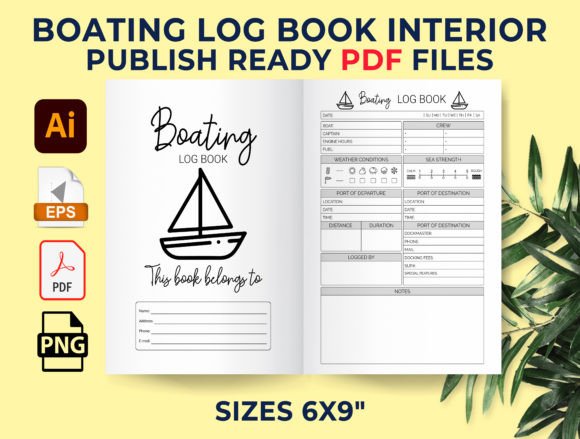
Most people who own a boat eventually develop a system for remembering things. Some use sticky notes. Some rely on memory. A few create elaborate spreadsheets that fall apart by the third month. What the Boating Log Book offers instead is a dedicated space, one that follows a per-day format and asks for the details that actually matter. At 6″ x 9″ and 120 pages, it fits into a glove box, a cabin shelf, or a dry bag without becoming clutter. The high-resolution print quality and KDP-tested formatting mean it looks clean and professional, whether you print it yourself or order it through a service. But the real value is not in the dimensions or the DPI. It is in what you choose to write down.
What Belongs in a Boating Log Beyond the Basics
The obvious entries are date, destination, weather, and engine hours. Those are the bones of any log. But the Boating Log Book provides space for notes, and that is where the real utility lives. Consider a day when the wind shifted unexpectedly. You were running at 2800 RPM and the fuel burn felt higher than usual. You made a mental note to check the trim tabs. If you write that down, you have a data point. If you do not, you lose it. Six weeks later, when the mechanic asks when the issue started, you have an answer. That is the difference between guessing and knowing.
Another situation involves unfamiliar waters. say you run a coastal trip to a harbor you do not visit often. You note the channel markers, the depth readings, and the spot where the fishing boats congregate. Next season, when a friend asks about that same harbor, you hand them the log. You do not rely on memory because memory compresses time. The log does not.
The Maintenance Side That Every Owner Will Eventually Need
New boat owners often underestimate how much tracking maintenance requires. Oil changes, filter replacements, bottom paint schedules, belt inspections, anodes, and batteries. Most of these happen on different intervals. The Boating Log Book allows you to record service alongside trip data, so you see the context. For example, if you notice vibration at cruise speed, you can flip back through recent entries and check whether it started after the last prop replacement or before. That correlation becomes harder to establish when maintenance records live in a separate folder somewhere else.
For those who do their own work, the value multiplies. You can log the torque spec you used on the outboard bolts, the brand of oil you preferred, and how the engine sounded during the test run afterward. Six months later, when you are doing the same service again, you do not have to look up the manual. You look at your log. It saves time and reduces mistakes.
Different People Use the Same Book in Different Ways
Not everyone logs for the same reason. A weekend angler on a small center console might track tides, bait locations, and catch counts. That same book looks completely different in the hands of a liveaboard cruiser who runs offshore passages. That person cares about fuel consumption per hour, weather windows, and maintenance intervals for a diesel engine that runs hundreds of hours each season. The Boating Log Book handles both because it does not force a rigid structure. The per-day format gives you a foundation, and the space for notes lets you customize as needed.
Charter operators or fishing guides have yet another use case. They need to document trips for business reasons, sometimes for insurance, sometimes for client records. A log that shows departure time, return time, conditions, and any mechanical notes provides professional documentation. It also helps with tax preparation if you deduct expenses based on usage. The simple tracking format makes it easy to tally hours at the end of the month without digging through receipts.
Then there are the families who share the boat. One person takes it out on Saturday, another on Wednesday. Without a log, things get lost. Who used the last life jacket? Did anyone notice the bilge pump cycling more often? When did someone last run the engine long enough to charge the batteries? A shared log solves that. It keeps communication clear and prevents small issues from turning into bigger ones.
Why a Physical Log Still Wins Over Digital Tools
There are apps for logging boat trips, and they work well for some people. But a physical log does not require a charged battery, a cellular signal, or a login. It works when your phone is dead, when you are offshore, or when your hands are wet. It also does not disappear if you change devices. The Boating Log Book offers something that screens do not: permanence without dependency. You can leave it on the boat, open it in seconds, and write while the engine is warming up. There is no friction.
The downside worth noting is that handwriting is slower than typing, and a physical book cannot auto-calculate totals for you. If you want monthly summaries of engine hours, you will need to add those manually. Some users address this by setting aside a few minutes at the end of each month to transfer totals into a spreadsheet. Others simply accept that the log is a record, not a report. It depends on how much analysis you need.
Observations from Real Use Over Time
One pattern that emerges among consistent log users is that they start simple and gradually add more detail. Early entries might say only the destination and hours. After a few months, entries begin to include fuel added, oil level, and notes about how the engine started. By the second season, entries often include observations about how the boat handled in specific sea states, performance notes, and reminders about upcoming service. The Boating Log Book accommodates that evolution because 120 pages give you enough room to refine your approach without running out of space.
Another observation involves problem diagnosis. A vibration that shows up only at certain RPMs might take weeks to diagnose if you rely on memory. With a log, you see the pattern in minutes. You notice that every entry above 3000 RPM mentions vibration, but entries below that do not. That tells you the issue is likely related to propeller balance or shaft alignment, not engine internal. That kind of insight saves diagnostic time and money.
Common considerations before starting a log include whether you will actually keep up with it. The honest answer is that some people will and some will not. The Boating Log Book works best for those who already find value in structure. If you are the type who writes notes on napkins and then loses them, this provides a better container. If you prefer zero documentation, no book will change that habit. But for anyone who has ever asked themselves, when did I last change that fuel filter? or, was that noise there last trip?, the log becomes less of a chore and more of a tool.
The Practical Limitations and How to Work Around Them
No single log covers every conceivable detail. The Boating Log Book does not have a dedicated section for GPS coordinates or fish counts, though the note space allows for those. It does not pre-print service intervals, so you will need to add those yourself. Some users paste in a maintenance schedule on the inside cover. Others mark pages with tabs for oil changes, impeller replacements, and winterization. The simple tracking format is versatile enough to accommodate those additions without becoming messy.
For those who use multiple boats, one log per vessel is the cleanest approach. Mixing entries for different boats in the same book creates confusion unless you label every entry clearly. The 120-page count works well for a single boat over one or two seasons of moderate use. Heavy users or liveaboards may finish the book in a single season and need a second volume.
Making the Log Work for You from Day One
The first few entries may feel awkward. That is normal. Start with just the basics: date, destination, engine start hours, engine end hours. Add weather conditions and any unusual observations. As you get comfortable, expand into fuel consumption, oil checks, and notes on how the boat performed. Within a few trips, you will find a rhythm that matches your style. The Boating Log Book is designed for that kind of adaptation. It does not prescribe a method. It gives you a framework and stays out of your way.
The real value shows itself months later. When someone asks how your season went, you do not sum it up with vague statements. You open the log and see exactly how many trips you made, what worked, what did not, and when you last serviced the drive. That kind of clarity changes how you approach boating. It turns every trip into information, and information becomes confidence.