Drone Flight Logbook: Your Comprehensive Flight Tracking Companion
Every drone pilot, whether flying for fun on weekends or managing a fleet for commercial inspections, quickly learns that consistency is the backbone of safe and efficient operations. But as flights multiply, details blur. How fast was that descent last Tuesday? What was the wind like at 120 meters? Was there a voltage dip on battery two? The Drone Flight Logbook bridges that gap between memory and precision, turning scattered flight experiences into organized, actionable data. More than a simple checklist, this logbook serves as a central hub for recording every critical metric of your airborne sessions, from takeoff to landing.
What Makes the Drone Flight Logbook Essential for Modern Pilots?
At its core, the Drone Flight Logbook is designed to answer the questions every operator eventually asks. What did my last flight look like in terms of altitude, speed, and battery performance? Did I exceed my personal limits or regulatory ceilings? By providing dedicated fields for altitude, speed, and altitude changes, this logbook transforms raw data into a narrative of your flying habits. It is not merely a diary; it is an analytical tool that helps you identify patterns, anticipate maintenance, and plan better routes. For professionals managing multiple drones or training new pilots, having a standardized record means consistency across the board.
Think of it as the difference between guessing your fuel consumption and having a detailed trip computer. The Drone Flight Logbook gives you the latter.Who Benefits from Using a Flight Logbook?
The audience for a dedicated logbook is broader than many assume. It is not limited to commercial operators or hobbyists. Rather, it spans across several groups who each find unique value in its structure:
- Recreational pilots who want to track their learning curve, remember favorite flying spots, and ensure they are staying within safe operational bounds.
- Professional surveyors and inspectors who need verifiable flight records for client reports, insurance compliance, or internal quality audits.
- Content creators and cinematographers who fly in dynamic environments and need to recall exact settings and conditions for repeat shots.
- Fleet managers and training organizations that oversee multiple pilots and require a uniform system for logging flights across different drones and locations.
- Business owners who use drones for agricultural mapping, real estate photography, or delivery services and want to optimize flight paths and battery usage over time.
Each of these users will find that the Drone Flight Logbook adapts to their specific context without becoming overly complex. You do not need to be a data scientist to fill it out, yet the insights it yields are surprisingly deep.
Features That Go Beyond Basic Note-Taking
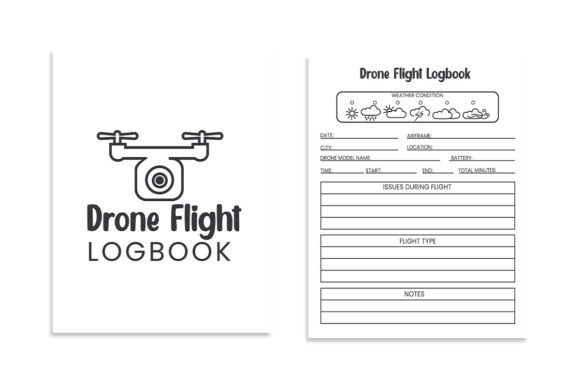
The Drone Flight Logbook distinguishes itself by offering a structured yet flexible format. With 30 high-resolution pages provided in multiple file formats—AI files, PDF files, and SVG files—you have the freedom to print, edit, or store digitally. This multi-format approach means you are never locked into one workflow. Whether you prefer handwriting notes in the field or typing them into a tablet, the logbook accommodates your style. The CMYK color scheme and 300 DPI resolution ensure that printed versions look crisp and professional, which matters when you are presenting records to clients or regulatory bodies.
Each page is designed to capture essential flight data without clutter. Typical fields include date, location, drone model, battery level, altitude, speed, altitude changes, weather conditions, and notes. The layout encourages consistency, so you develop the habit of logging every flight, not just the memorable ones. Over time, this habit becomes second nature, and the accumulated data becomes a valuable reference library.
Altitude and Speed Tracking: The Core Metrics
Altitude and speed are the two dimensions most frequently referenced when analyzing flight performance. The Drone Flight Logbook dedicates clear, organized spaces for recording both ascending and descending altitude changes, as well as maximum and average speeds. This granularity allows you to see if you are pushing the drone too hard during climbs or if your descent rates remain within safe parameters. For FPV pilots, speed logs help refine racing lines; for mapping drones, altitude stability is critical for image overlap and accuracy.
- Altitude changes: Logging the rate and magnitude of climbs and descents helps with battery management and motor health monitoring.
- Speed records: Knowing your typical cruising speed versus top speed informs route planning and helps avoid flight envelope violations.
- Combined metrics: When altitude and speed are tracked together, you can identify flight phases that stress the aircraft most.
By consistently recording these values, you build a performance baseline. Any deviation from that baseline—such as a drone that suddenly struggles to reach its usual altitude—becomes an early warning signal for maintenance needs.
Real-World Applications: From Training to Client Deliverables
Imagine you are training a new pilot on a complex mapping mission. Without a logbook, debriefing sessions rely on memory and vague descriptions. With the Drone Flight Logbook, you can review exactly where the trainee maintained altitude, where speed fluctuated, and how battery levels corresponded to flight phases. This objective record turns feedback into a coaching opportunity rather than a guessing game.
For a real estate photographer, a logbook helps replicate successful flights. Did the best lighting happen at a consistent altitude of 50 meters with a slow flyover speed? Log it. Next time you are on a similar property, you can dial in those parameters immediately, saving time and ensuring consistent image quality. Business owners who bill by the hour or by the project also benefit from clear documentation of flight duration and conditions, which strengthens invoices and client trust.
Fleet operators find particular value in the Drone Flight Logbook for compliance. In many jurisdictions, maintaining flight records is not just best practice—it is a regulatory requirement. Having a standardized, printable logbook that you can present during audits or insurance reviews is a significant advantage. The ability to store logs digitally (via the included AI and SVG files) means you can back up your records easily, or even integrate them into a larger fleet management system.
Strengths That Stand Out
One of the most notable strengths of the Drone Flight Logbook is its balance between structure and flexibility. The pages guide you without restricting you. You are free to add your own notes, sketch flight paths, or highlight anomalies. The 30-page count provides substantial coverage without becoming overwhelming—ideal for both weekly fliers and daily operators. The high-resolution design means that even after multiple printings, the layout remains clear and readable.
Another advantage is the multi-format delivery. Not every pilot works the same way. Some prefer a physical notebook they can take to the field; others want a digital file they can edit on a laptop. By including AI, PDF, and SVG files, the logbook accommodates both preferences. The CMYK color profile and 300 DPI resolution also ensure that colors remain accurate if you choose to print at a professional shop, which can be important for branded materials or client-facing documents.
What About Limitations? Considerations for Different Users
No tool is perfect for everyone, and the Drone Flight Logbook is no exception. Some users may find that 30 pages are not enough for a full season of heavy flying. However, since the files are editable, you can print additional copies or duplicate pages as needed. Others might wish for more specialized fields, such as GPS coordinates or camera settings. While the logbook covers the most common metrics, advanced users may supplement it with additional notes or custom fields.
For pilots who rely entirely on cloud-based logging apps, a physical or printable logbook may feel like a step back. Yet, many professionals value having a non-digital backup, especially when flying in remote areas where connectivity is unreliable. The logbook also serves as a tactile record that is harder to accidentally delete or corrupt than a cloud file.
Another consideration is the learning curve of building a logging habit. At first, filling out pages might feel like unnecessary paperwork. But within a few flights, most pilots find that the process becomes quick and intuitive, taking only a minute or two per session. The real value emerges after several weeks, when you begin to notice trends and improvements in your flying.
How to Evaluate Whether This Logbook Is Right for You
Choosing a flight logbook depends on your specific needs and workflow. Here are a few questions to guide your decision:
- Do you fly regularly enough that tracking details would help you improve safety or performance? If yes, the Drone Flight Logbook is a natural fit.
- Do you need to present flight records to clients, regulators, or insurers? The professional layout and multi-format support make it a strong candidate.
- Do you prefer a customizable format that works both on paper and screen? The AI and SVG files give you that flexibility.
- Are you training others or managing a small fleet? Standardized logs reduce confusion and create a shared reference point.
If you answered yes to any of these, the logbook likely offers clear value. Even if you are a casual flyer, the habit of logging can deepen your understanding of your drone's behavior and your own skill progression.
Practical Tips for Maximizing Your Logbook
Once you have the Drone Flight Logbook ready, a few simple practices will help you get the most out of it. First, fill in the pre-flight section before you launch—this ensures you do not forget details like battery charge and weather conditions. Second, reserve a few minutes after each flight to record altitude changes and speed data while they are still fresh in your mind. Third, periodically review your logs to identify patterns. Are your flights getting longer? Are you consistently flying at similar altitudes? This review turns raw data into strategic insight.
Consider color-coding entries for different drones or mission types to make scanning easier. Since the logbook uses a clean CMYK layout, you can add highlights or stickers without overwhelming the design. For digital users, the SVG files allow you to edit fields directly, or even build a spreadsheet summary from your entries.
Conclusion: A Small Investment with Lasting Returns
The Drone Flight Logbook is more than a notebook—it is a system for turning flight data into wisdom. By diligently recording altitude, speed, altitude changes, and other vital details, you build a personalized reference library that supports safer operations, better planning, and continuous improvement. Whether you are a weekend enthusiast or a commercial operator, the logbook's thoughtful design, high-resolution formats, and printable flexibility make it a practical addition to your gear.
Flying a drone is about exploration, precision, and creativity. Keeping a logbook ensures that each flight contributes to your growth as a pilot, rather than being just another memory that fades. With the Drone Flight Logbook by your side, you will always have a clear record of where you have been and a reliable guide for where you are going next.