Cheetah Print 4 Journal Interior for KDP Publishers
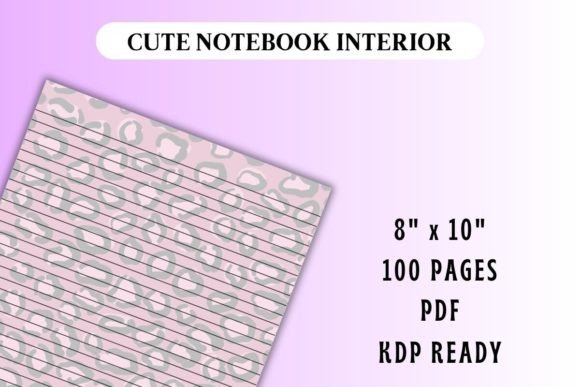
If you have spent any time building low-content books for print-on-demand platforms, you know that the interior design can make or break your listing. A cover gets the click, but the interior earns the sale and the reviews. The Cheetah Print 4 Journal Interior is a ready-to-upload digital asset that gives you a polished, cohesive look across one hundred pages per file, with sixty individual PDFs included. That means you can create multiple distinct journal variations without starting from scratch each time.
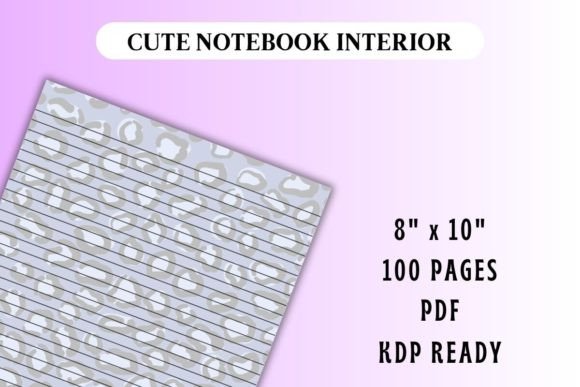
This interior is built around a bold cheetah spot motif, but the design goes beyond simple pattern repetition. The spot arrangement is scaled and placed to keep pages functional rather than overwhelming. You get a consistent visual theme that still leaves plenty of room for writing, sketching, or planning. For publishers who want a product that feels intentional, this interior strikes a solid balance between decoration and utility.
What Makes This Interior Stand Out
The cheetah print here is not the loud, high-contrast version you might remember from early 2000s fashion. Instead, it has been refined into something that works across multiple aesthetics. The spots are rendered in a way that reads as organic and slightly irregular, which gives the pages a handcrafted feel. That matters because buyers today are looking for journals that feel personal, not mass-produced.
Each of the sixty PDF files is formatted at 8 x 10 inches with one hundred pages, so you have plenty of material to build a series or test different cover designs against a single interior. The files are print-ready and comply with standard KDP upload requirements. No extra formatting, no margin adjustments, no last-minute scrambling with software you barely use. You open the file, upload it, and move on to cover design and listing optimization.
From a visual standpoint, this interior works well for anyone targeting buyers who appreciate animal-inspired patterns but want something more subtle than leopard or zebra prints. The cheetah motif carries connotations of speed, focus, and quiet confidence. Those associations can influence how a buyer perceives the journal before they even write in it. If you are building a brand around empowerment, goal-setting, or creative flow, this pattern reinforces that messaging without saying a word.
Practical Applications Across Project Types
The Cheetah Print 4 Journal Interior is not limited to one type of notebook. The design adapts naturally to several formats:
- Guided journals – the pattern provides enough visual interest to fill negative space on prompt pages, making each spread feel complete
- Sketchbooks – the organic spot arrangement complements loose drawing styles and does not fight with graphite or ink
- Planners and goal-setting notebooks – the cheetah theme aligns with concepts like speed, agility, and progress
- Gratitude journals – the warm, natural tones of the print create a calming backdrop for daily reflection
- Travel journals – the safari-inspired motif fits travel themes without being clichéd
For content creators and bloggers who sell digital products on Etsy or Gumroad, this interior also works as a printable download. You can offer it as a fillable PDF or a print-at-home journal. The 8 x 10 size is standard and easy for customers to print on home equipment or at a local shop.
How the Interior Influences Readability and Visual Hierarchy
One concern with patterned interiors is that the background competes with handwritten content. The Cheetah Print 4 Journal Interior avoids that trap by using a lower-opacity treatment for the spots. They remain visible enough to establish the theme, but they recede when writing starts. This is a subtle but critical design decision. If the pattern were too dense or too dark, the journal would feel busy and hard to use. As it stands, the hierarchy stays clear: handwriting sits on top, the pattern supports underneath.
For publishers who care about user experience, this balance is the difference between a five-star review and a return. Buyers who purchase a patterned journal expect the aesthetic to enhance the experience, not detract from it. This interior delivers on that expectation by letting the pattern do its job without overstepping.
The visual hierarchy also extends to how the eye moves across the page. The irregular spacing of the spots creates a natural flow that guides the eye gently rather than locking it into rigid grid lines. That can be especially useful for creative journals where the user wants to brainstorm, mind-map, or free-write. The page feels open and permissive, not structured and restrictive.
Brand Perception and Audience Engagement
If you are publishing under your own brand or building a catalog for a print-on-demand store, consistency matters. Using the Cheetah Print 4 Journal Interior across multiple titles creates a recognizable look. Customers who buy one journal from you are more likely to return if they recognize the interior style and know what quality to expect.
The cheetah pattern also signals a certain personality. It is bold but not aggressive, fashionable but not trendy. That positions your brand as confident and curated. For small business owners and entrepreneurs who sell journals as part of a larger product line, this consistency helps build brand identity without requiring a custom design for every single SKU.
Audience engagement also benefits from the emotional association with the animal itself. Cheetahs are often linked to focus, speed, and grace under pressure. A journal buyer who resonates with those traits may feel that the notebook reflects their own values. That emotional connection can lead to higher perceived value and a stronger willingness to pay a premium price.
Practical Guidance for Choosing and Using This Interior
Before you download and upload, take a few minutes to evaluate whether this specific interior fits your target audience and product category. Ask yourself these questions:
- Does my audience respond to animal-inspired patterns, or are they looking for minimalist designs?
- Will the cheetah motif complement my cover design, or will it clash with the cover art?
- Am I planning to offer multiple journals that share a theme, or is this a standalone product?
- Does the 8 x 10 size match my preferred trim size, or do I need to adjust bleed and margin settings?
If you are targeting a younger demographic or a fashion-conscious audience, the pattern will likely resonate well. If your audience skews toward corporate or academic buyers, a more subdued interior may be a safer choice. That said, the refined treatment of this particular print makes it more versatile than traditional cheetah patterns, so it can work in niches where you might not expect it.
When it comes to font pairings for the cover and spine, stick with clean sans serif fonts or modern display fonts that echo the organic curves of the spots. Avoid overly rigid geometric fonts that fight the natural flow of the pattern. A good pairing might be a rounded sans serif like Nunito or a handwritten script that mirrors the irregularity of the spots. For the back cover and spine, keep typography minimal and let the pattern carry the visual weight.
Testing and Validation Before Launch
Before you commit to using the Cheetah Print 4 Journal Interior for a full catalog, print one proof copy and test it yourself. Write in it. See how the pattern interacts with different pen types. Test with ballpoint, gel, and fountain pens if possible. Some interiors that look great on screen become problematic in real-world use when ink bleeds or the pattern overpowers handwriting. This interior holds up well in my experience, but your specific printer and paper choice can affect the final result.
Also consider creating two versions of the same journal: one with this interior and one with a plain lined interior. List them side by side and track which one performs better. That data will tell you whether the pattern adds value for your audience or whether they prefer a cleaner page. You might find that certain niches respond strongly to the pattern while others ignore it entirely.
Real-World Recommendations for Publishers
If you are new to low-content publishing, start with one or two titles using this interior rather than launching ten at once. Test the upload process, check the preview on KDP, and order a proof before going wide. The sixty files give you enough variety to experiment without overwhelming your workflow.
For experienced publishers, this interior is a solid addition to a themed series. Consider bundling it with complementary products like a matching notebook, a sticker sheet, or a digital planner cover. Because the pattern has a distinct identity, it lends itself well to brand extensions. You could even create a set of three journals with different spot scales or color variations if you adjust the files further in your own design software.
Marketers and brand strategists can use the cheetah motif in social media graphics to build anticipation for a launch. Share a close-up of the pattern, talk about the design inspiration, and let followers see the interior before it goes live. That kind of content performs well on visual platforms and helps establish authority in the niche.
One final observation: the interior works especially well for products aimed at people who value self-improvement and personal development. The cheetah is a symbol of focused action, and journals dedicated to goals, habits, or productivity benefit from that underlying message. If you already sell in that space, this interior is a natural fit that reinforces your brand without requiring additional design work.
The Cheetah Print 4 Journal Interior gives you a ready-to-use foundation that saves hours of layout and formatting time. With sixty files and one hundred pages each, you have everything you need to launch multiple products or build a cohesive series. Focus your energy on cover design, keyword research, and listing optimization, and let the interior handle the visual consistency and user experience on its own.