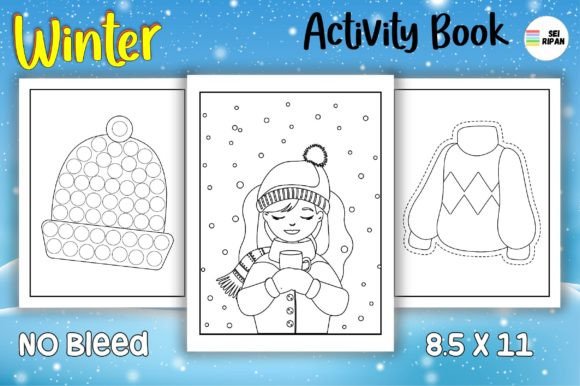
Winter Activity Book for Kids - 05: A Strategic Tool for KDP Creators and Educators
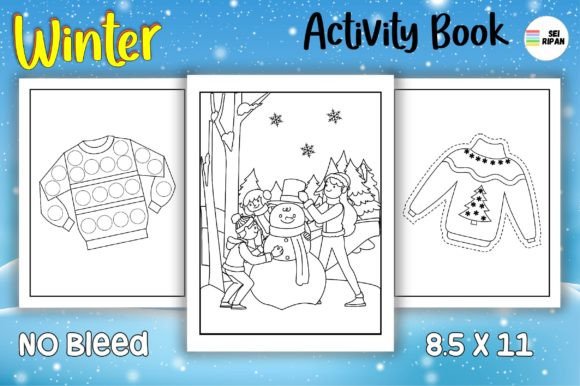
If you are building a children’s activity book business on Amazon KDP—or simply trying to create engaging, skill-building content for young learners—you have likely noticed that not all activity books are created equal. The difference between a product that sells steadily and one that gets lost in the algorithm often comes down to thoughtful design, clear purpose, and genuine developmental value. Winter Activity Book for Kids - 05 represents a focused approach to this market. It is not just a collection of random winter-themed pages; it is a structured set of activities including dot markers, scissor skills, coloring pages, and mazes, delivered in both PDF and JPG formats. For entrepreneurs, educators, and creators who treat content creation as a strategic practice, understanding what makes this interior useful—and how to deploy it intentionally—can make a real difference in both learning outcomes and business results.
This article is written for adults who make decisions about content: KDP publishers, freelance designers, homeschooling parents, teachers, and small business owners who need reliable, print-ready materials. Instead of generic praise or surface-level description, we will look at how a resource like this fits into broader goals, why it matters beyond the immediate activity, and how to avoid the common pitfalls that come with using such tools without a clear plan.
What Winter Activity Book for Kids - 05 Actually Offers
Before we get into strategy, it helps to be precise about what this interior includes. The download contains four activity types: dot marker pages, scissor skills exercises, coloring pages, and mazes. All files are provided as PDF and JPG, which means you have flexibility in how you use them—whether for print-on-demand, digital distribution, or even physical printing at home or in small batches. The winter theme is consistent throughout, which gives the book a cohesive feel rather than a random assortment of unrelated pages.
For a KDP creator, this kind of interior is valuable because it saves design time while still offering a complete product. But more importantly, the activity types themselves serve distinct developmental purposes. Dot markers help with fine motor control and color recognition. Scissor skills build hand strength and coordination. Coloring pages encourage creativity and focus. Mazes develop problem-solving and spatial reasoning. When you combine these into one book, you are essentially offering a multi-skill resource in a single purchase. That is a practical advantage for parents and educators who want variety without buying multiple books.
From a business perspective, having a ready-to-print interior means you can focus your energy on cover design, product descriptions, and marketing—areas that often determine whether a book gets noticed. The quality of the interior remains a critical factor in reviews and customer satisfaction, so starting with a well-designed base matters.
Strategic Use Cases for Different Audiences
One mistake many creators make is treating an activity book interior as a one-size-fits-all product. In reality, how you use Winter Activity Book for Kids - 05 depends heavily on your specific goals, your audience, and your distribution channel. Let’s break this down by common use cases.
For KDP Publishers and Print-on-Demand Sellers
If your primary goal is to build a catalog of profitable children’s books, this interior gives you a complete, tested structure. You can pair it with a seasonal cover and launch it as a winter-themed activity book. Because the activities are varied, you can target keywords like “winter activities for kids,” “preschool workbook,” and “fine motor skills practice.” The PDF and JPG format also means you can offer the book in both paperback and digital versions, expanding your potential reach. However, a strategic approach would be to also consider how this interior fits into a series. If you create a winter book, can you later create spring, summer, and fall versions using a similar format? That kind of planning turns a single product into a repeatable system.
For Educators and Homeschooling Parents
If you are using the book directly with children, the value lies not just in the pages but in how you sequence them. Dot marker activities are typically easier and less intimidating for younger children, so they work well as warm-up tasks. Scissor skills require supervision and should come after the child is comfortable with basic hand control. Coloring pages can be used as a calming or free-choice activity. Mazes can be introduced as a challenge for more advanced learners. By thinking about the order and purpose of each section, you turn a simple book into a developmental tool that supports progression.
For Freelance Designers and Content Creators
If you are creating custom books for clients or building a portfolio, an interior like this can serve as a reference for layout, activity variety, and thematic consistency. Studying how the pages are organized—how the dot marker pages differ from the maze pages in terms of visual density, how the scissor skills pages balance instruction with open space—can inform your own designs. You might also adapt the format to other themes, using the same structure but changing the graphics and copy. This is a practical way to scale your creative output without reinventing the wheel each time.
When to Use This Type of Interior
Timing matters. A winter activity book is naturally suited for the months leading up to and including December through February. But if you are publishing on KDP, you need to think about lead time. Amazon’s algorithm tends to reward listings that are established before the seasonal peak. That means uploading and optimizing the book in late summer or early fall gives you the best chance of ranking when demand spikes. For digital downloads, you can promote the book earlier, as parents and educators often plan ahead.
Beyond seasonality, consider the developmental stage of the target child. Dot markers and scissor skills are typically aimed at children aged 2–5, though some mazes and coloring pages can appeal up to age 7. If your audience skews older, you might need to supplement the interior with more complex activities. But as a standalone book, this is best positioned for preschool and early elementary learners.
Important Considerations Before You Commit
No tool is perfect for every situation, and being strategic means understanding the limitations as well as the strengths. Here are a few factors to weigh before relying on Winter Activity Book for Kids - 05 for your next project.
- Format flexibility: The fact that you receive both PDF and JPG files is a major advantage. But if your print-on-demand service requires specific bleed margins or color profiles, you may need to do minor adjustments. Always check your POD provider’s specifications before uploading.
- Activity balance: While the four activity types are well-chosen, the mix may not suit every customer. Some parents might prefer more coloring pages and fewer mazes, for example. Consider whether you want to offer multiple versions or allow customization. This will help you manage expectations and reduce returns or negative reviews.
- Uniqueness and competition: Winter activity books are a popular category. To stand out, your cover, title, and description need to clearly communicate the specific benefits of your version. Focus on the skills developed (fine motor, problem-solving, creativity) rather than just listing activities.
- Testing before scaling: If you are new to KDP, start with a single interior like this and test the market with one well-crafted listing before investing in a whole series. Use reviews and sales data to decide if the format resonates with your audience before expanding.
Risks of Using an Activity Book Interior Without Clear Goals
It is easy to fall into the trap of thinking that a good interior automatically means a good product. But without a clear plan, even the best content can underperform. One common risk is mismatched expectations. If you market the book as a “comprehensive winter learning resource” but the interior only has 30 pages of activities, customers might feel misled. Being honest about the scope and depth of the book helps build trust and reduces returns.
Another risk is ignoring the user experience. A parent or teacher using the book needs clear instructions, especially for scissor skills and dot marker activities. If the pages are not labeled or if the difficulty progression is unclear, the book becomes frustrating rather than helpful. Even small design choices—like font size, line thickness, and spacing—can make a big difference in how easily a child can use the book independently.
Finally, there is the risk of over-relying on a single interior. If you build your entire KDP business around one winter activity book, you are vulnerable to seasonal dips and algorithm changes. A more sustainable approach is to treat this interior as one component of a broader content strategy that includes multiple themes, age ranges, and activity types.
How to Use Winter Activity Book for Kids - 05 Intentionally
Intentional use starts with asking the right questions before you publish or distribute. What specific problem does this book solve for the buyer? Is it keeping a child occupied during winter break? Building fine motor skills? Providing screen-free entertainment? Once you are clear on the primary benefit, you can tailor your marketing and positioning accordingly.
Next, think about the user journey. When a parent opens this book, what do they see first? A title page, a table of contents, or straight into the activities? If you want to build a professional product, consider adding a brief note to parents or teachers at the beginning explaining how to use each section and what skills it supports. This small addition can differentiate your book from competitors and increase perceived value.
Also, consider how you bundle or promote the book. If you are selling on KDP, you might offer the coloring pages as a free sample to build email subscribers or social media followers. If you are a teacher, you might print only the mazes and dot marker pages for a winter-themed center, saving the scissor skills for a separate fine motor station. The modular nature of the interior allows you to extract value in different ways depending on your context.
Practical Planning Tips for Long-Term Value
To maximize the return on your investment in a resource like this, think beyond the immediate launch. One approach is to create a series of seasonal activity books using the same interior structure. This not only saves design time but also builds brand recognition. Parents who buy the winter book may be more likely to purchase your spring or fall versions if they had a positive experience.
Another tip is to collect feedback from early users—whether that is through Amazon reviews, direct emails, or social media polls. Find out which activities were most popular, which were too easy or too hard, and what additional features customers wish existed. This information can guide your next interior purchase or design project.
You can also use the JPG files for promotional purposes. Create short video clips showing a child completing a maze or dot marker page, and share them on social media. Visual demonstrations of the book in use are far more persuasive than text descriptions alone. This is especially effective on platforms like Instagram, Pinterest, and TikTok, where parents actively search for activity ideas.
Final Thoughts on Building with Purpose
The most successful KDP creators and educators do not treat activity books as throwaway products. They see them as tools that support real developmental goals, solve practical problems for busy adults, and fit into a larger content ecosystem. Winter Activity Book for Kids - 05 is a solid example of a purpose-built interior that can serve multiple audiences when used with intention. Whether you are publishing for profit, teaching a classroom, or designing for clients, the key is to approach the resource strategically—not as a quick fix, but as a building block for something larger.
By understanding what it offers, who it serves, and how it can be deployed across different contexts, you turn a simple download into a meaningful asset. And that is the kind of thinking that leads to better results, whether measured in sales, learning outcomes, or creative satisfaction.