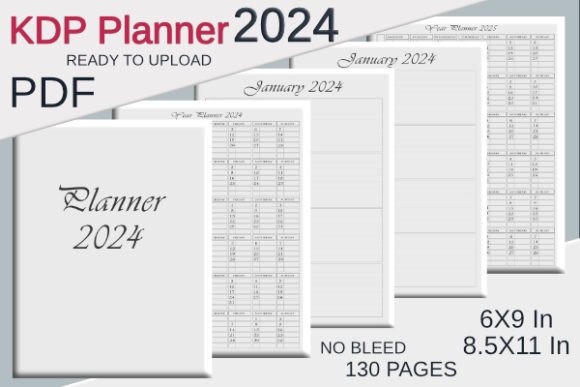
KDP Planner Interior Horizontal Layout Guide
If you have spent any time preparing low-content books for Amazon KDP, you know that the interior layout can make or break a sale. A planner must feel intuitive the moment a customer opens it. The KDP Planner Interior Horizontal delivers exactly that kind of experience. It is a complete, print-ready interior file designed for weekly spreads with additional notes pages toward the back. Available in both 6×9 and 8.5×11 inches, this 130-page black-and-white interior uses grid-lined paper to keep writing organized without feeling rigid. The horizontal layout shifts away from the traditional vertical planner structure, offering a wider canvas for weekly planning. That simple change in orientation affects how people scan, write, and return to their planner day after day.
What Makes a Horizontal Weekly Spread Work
Most planners stack days vertically, which forces the eye to move up and down repeatedly. A horizontal spread flips that dynamic. You see the full week across two facing pages, with each day running left to right. That matches natural reading patterns and makes it easier to compare tasks across the week at a glance. The KDP Planner Interior Horizontal takes advantage of this by providing generous grid-lined space for each day. The grid lines keep handwriting neat without dominating the page. There is enough room for appointments, task lists, and quick notes without the clutter that often comes with pre-printed categories. For anyone managing multiple projects, this layout reduces the mental load of fitting everything into tiny boxes.
Visual Personality and Overall Appeal
This interior carries a clean, professional personality. It does not rely on decorative elements or heavy typography to create interest. Instead, the structure itself does the work. The grid lines are subtle, and the page margins are balanced so the content breathes. That restrained approach appeals to adults who use planners as serious productivity tools, not just decorative notebooks. Entrepreneurs, marketers, and small business owners will find the layout familiar enough to adopt quickly but flexible enough to adapt to their own systems. The black-and-white format also keeps printing costs low, which is a practical advantage when selling on KDP. Readers who prefer to add their own color coding or stickers will appreciate the neutral foundation.
Where This Interior Works Best Across Projects
The versatility of this layout goes beyond personal planning. Many content creators and bloggers use printed planners to map out editorial calendars, social media posts, and content weeks. The horizontal spread gives you room to plan a full week of topics without flipping pages. Course creators and online educators also find value in this format for lesson planning or workshop schedules. On the commercial side, small businesses can brand this interior with their own cover and sell it as a customized planner for their niche audience. The 8.5×11 size works especially well for team planning or client-facing materials where readability matters at a glance. The 6×9 version is more portable and suits individual use or gift giving.
Readability and Visual Hierarchy
A planner interior does not need fancy typography to establish visual hierarchy, but the way information is structured matters deeply. In the KDP Planner Interior Horizontal, the hierarchy comes from the grid system itself. Day headers sit at the top of each section, and the lined grid provides clear rows for entries. That consistency helps the reader locate information quickly, even when they revisit the same spread weeks later. Because there is no decorative noise, the reader’s eye moves freely between days. This is especially important for adults who use planners under time pressure, such as during client calls, project meetings, or while reviewing weekly goals. The grid lines also support neat handwriting, which improves legibility when scanning back through previous weeks.
From a brand perception standpoint, a clean interior signals professionalism. A planner that feels overdesigned can undermine trust, especially in business contexts. This interior communicates that the publisher values function over decoration. That alignment with practical use builds recognition and credibility with repeat buyers. When customers see consistency across multiple planners from the same publisher, they are more likely to return for additional products.
Practical Guidance for Choosing and Evaluating This Interior
Before you upload any interior to KDP, you need to confirm that it fits your intended audience. The KDP Planner Interior Horizontal works best for people who plan by the week rather than by the day. If your target buyer is someone who manages a packed schedule across multiple roles, this layout will support them well. But if your audience prefers hourly breakdowns or habit tracking, you may need to supplement with additional pages. The 130-page count includes weekly spreads and a handful of notes pages at the back, which gives users space for brainstorming or meeting notes without blowing the page count.
Testing Fit and Pairing with Other Elements
When you pair this interior with a cover design, keep the aesthetic consistent. A minimalist or clean cover style will reinforce the interior tone. Avoid heavy script fonts or ornate cover designs that promise a different experience than what the grid interior delivers. For font pairings on the cover, a simple sans serif font like Inter or Montserrat works well with the grid interior. If you prefer a more editorial look, a light serif like Source Serif Pro can add warmth without conflict. The interior itself does not rely on display fonts, but the notes pages are flexible enough to support any handwriting style. That is an advantage because it does not force a particular aesthetic on the user.
Readability Considerations Across Sizes
The 6×9 version of this interior is compact. The grid lines are scaled appropriately, but users with larger handwriting may find the space tighter than expected. If your target audience includes older adults or people who prefer larger writing, the 8.5×11 version is a better choice. The larger size also accommodates more detailed notes per day, which is useful for professionals who attend multiple meetings. Test both sizes yourself before committing to a listing. Print a few sample spreads from each size and write in them with a typical pen. Notice how the grid lines interact with your handwriting. That physical test will tell you more about readability than any screen preview can.
Commercial Licensing and File Usage
One of the practical advantages of a complete planner interior like this one is the commercial license. You can upload it to KDP as part of your own product listing without worrying about copyright restrictions. The file includes two PDFs, one for each trim size, so you do not need to resize or reformat anything. That saves hours of manual adjustment and reduces the risk of formatting errors during KDP review. The black-and-white interior also means you can price competitively while maintaining a reasonable margin, because printing costs stay low. If you are new to publishing on KDP, this type of ready-to-use interior removes the steepest learning curve, which is layout and pagination.
Real-World Examples and Design Observations
I have tested several planner interiors for client projects over the past year, and the horizontal weekly spread consistently earns higher engagement from users who manage client work. One client, a freelance brand strategist, switched to a horizontal layout after struggling with vertical planners that forced her to abbreviate client notes. The extra horizontal space let her write meeting details directly next to task deadlines, reducing the time she spent cross-referencing separate pages. Another user, a blogger with multiple content channels, used the notes pages in the back to draft headline ideas and social media captions. The grid lines kept those notes organized even though they were not part of the weekly spread. Small details like that matter more than people realize until they try a layout that actually fits their workflow.
How Layout Influences Consistency and Habit
Consistency is not just about brand recognition. It also affects whether someone actually uses the planner. When the layout stays predictable week after week, the brain stops spending energy figuring out where to write and starts focusing on what to write. The KDP Planner Interior Horizontal supports that by keeping the same structure across all 130 pages. There are no sudden variations in grid spacing, no inserted worksheets that break the rhythm. That predictability builds a habit loop. The user opens the planner, sees the familiar spread, and begins planning without friction. Over time, that ease of use becomes the main reason they keep buying the same planner format. For a KDP publisher, that translates into repeat sales and word-of-mouth recommendations.
Final Practical Recommendations
If you decide to publish this interior, focus your product description on the practical benefits of the horizontal layout. Explain how it reduces eye strain, supports natural reading patterns, and leaves room for detailed notes. Avoid vague claims about productivity and instead show specific examples of how a user might fill a spread. Include screenshots of a filled-in sample page so buyers can see the grid in action. If you have a print-on-demand setup, order a proof copy and write in it before publishing. That hands-on test will reveal any spacing issues or alignment concerns that a PDF preview cannot show. The KDP Planner Interior Horizontal gives you a solid foundation. The rest comes down to how well you communicate its real-world value to the right audience.